


How Tel Aviv University’s Psychedelic Research is Revolutionizing Trauma Care
Inside Israel’s first center dedicated to psychoactive medicine and brain-informed therapy
As Israel grapples with the aftermath of October 7th and the ensuing war, it is facing a mental health crisis of unprecedented proportions. The demand for treatment has quickly outpaced what traditional therapy can deliver and the need for innovation is urgent. At Tel Aviv University’s Institute for Psychedelic Research (IPR), scientists and clinicians are developing a bold alternative grounded in a simple premise: healing depends on restoring the connections that trauma erodes.
“The loss of connection is the silent wound that lies at the core of trauma, depression and addiction. It is the feeling of being cut off from yourself, from others, from the world,” says Prof. Talma Hendler, Director of the Institute and a member jointly of TAU’s Gray Faculty of Medical & Health Sciences and the School of Psychological Sciences. “Our work is about helping people reconnect in a real, lasting way.”
Founded two years ago under the auspices of TAU’s Sagol School of Neuroscience, and embedded within Ichilov Hospital, the IPR is the first in Israel to explore the use of psychoactive medicine for treating post-traumatic stress disorder (PTSD), depression, chronic pain and other conditions at the intersection of neurology and psychiatry. The launch of the project was made possible by the generous contributions of TAU supporters Jeremy Coller, Dr. David B. Katzin, and Dr. Dmitry Repin. Moreover, a dedicated laboratory is being built for psychedelic research at the Miriam and Moshe Shuster Building for the Center for Traumatic Stress and Resilience, now nearing completion.
Closing the Gap Between Neuroscience and Therapy
Despite decades of research on how trauma affects the brain, most therapy still relies entirely on conversation and assessments based on subjective report and impressions. After two decades of neurobiological research on human stress and trauma, Prof. Talma Hendler’s team is trying to bridge the translation gap between neuroscience and therapy with an approach they call Brain-Informed Psychotherapy.
Using technologies such as Prism*, pioneered by Hendler’s lab, patients learn to regulate the deep emotional circuits involved in fear and stress. These sessions are paired with psychotherapy that helps them reinterpret traumatic memories, rebuild trust, and restore agency.
“There’s a moment when a patient realizes, ‘I can actually influence my own brain state,’” says Hendler. “That moment can change everything.”
Providing a Window for Change
Psychedelic compounds like psilocybin (hallucinogenic mushrooms), MDMA and ketamine are gaining attention worldwide because they can temporarily make the brain incredibly flexible, a state scientists call a “window for change.”
“Think of the brain as a complex traffic system with multiple hubs. Each hub is a network of regions with its own role: one helps with control and regulation, another detects threat, yet another provides memory and context. In a healthy brain, traffic moves flexibly, and there are many open routes between the hubs.
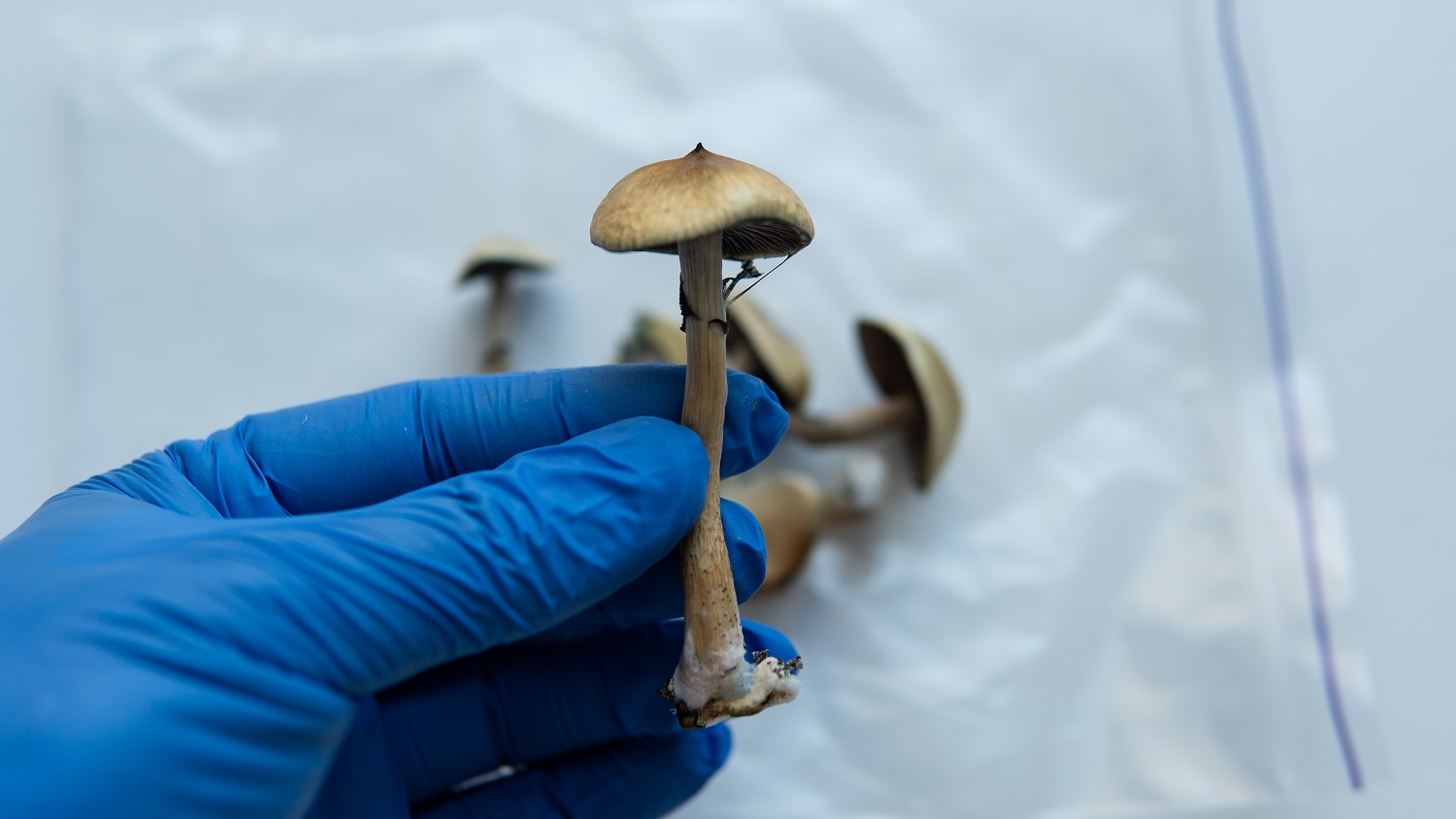
In PTSD, these routes become rigid. When the alarm network activates as a response to a trauma trigger, the control and memory networks are blocked from sending information that the person is actually safe, so the alarm keeps escalating,” Hendler explains.
Psychedelic substances temporarily change this maladaptive flow. Over one to three weeks, new routes open and blocked networks begin exchanging information again.
“In that window of renewed plasticity, psychotherapy can gently redirect the system — helping the brain relearn safety, rebuild balance, and reconnect with oneself and others in reality,” Hendler says. “The goal is to use that brief period of biological malleability to create a lasting, positive change in the neural underpins of mental health.”
To achieve this mission, the IPR team — an interdisciplinary mix of clinicians, neuroscientists, and psychologists — is developing a new model of mental health care, one that combines cutting-edge brain science with individual-centered, brain-informed psychotherapy. “The drug opens the door,” Hendler notes, “but lasting recovery depends on the steps that follow: patient involvement, brain-informed clinical approach and the supportive community that lead toward wholesome healing.”
Early Results: Hope Returning
One of the Institute’s first major successes came from a seven-day ketamine-assisted protocol for chronic PTSD, developed in partnership with Yale University. The early results were groundbreaking: out of 35 participants, 80 percent experienced a meaningful reduction in PTSD symptoms. “Out of the group that received Ketamine (vs control drugs), 40 percent no longer met diagnostic criteria for PTSD three months after the treatment”, says Dr Jacob Nimrod Keynan, the scientific manager of IPR.
“For the first time in years, I felt like I could get better,” one participant said. “It gave me energy to keep fighting for myself.”
Psilocybin appears to offer an even longer and more powerful window for therapeutic change. IPR is the first research center in Israel to administer synthetic psilocybin to humans, and the Institute is now running Israel’s first clinical and imaging study of psilocybin-assisted short-term psychotherapy for PTSD. According to Dr Keynan, the first two patients — both combat veterans— experienced substantial symptom relief and no longer met PTSD diagnosis criteria following the 3-week treatment. Importantly, they further reported meaningful improvements in depression, emotional openness and day-to-day functioning, even after three months.
One described a shift he didn’t expect: “The treatment helped me understand how to reconnect with my daughter — and why I hadn’t been able to before.”
Where Trauma Care Is Heading
The next frontier, IPR researchers say, is combining psilocybin therapy with other brain-informed therapies such as neurofeedback or magnetic stimulation to strengthen the brain circuits that sustain recovery. In the long term, the IPR team is exploring AI-supported tools, as well as music and virtual reality, to help patients track insights, organize their emotional work, and carry therapeutic momentum into daily life.
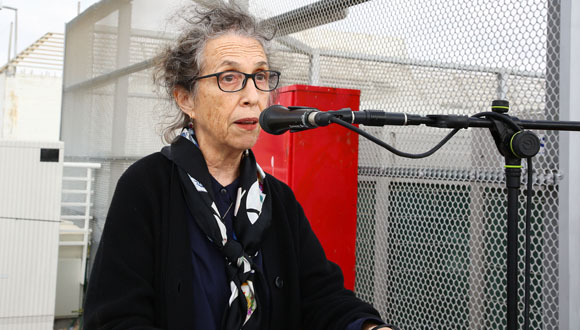
Professor Talma Hendler, speaking at the IPR inauguration during the 2023 TAU Board of Governors meeting.
“We aim to redesign trauma care from the ground up,” says Hendler. “Precise, measurable, deeply personal, and focused on restoring neural and psychological connections.”
As Israel continues to confront profound psychological wounds, IRP’s work offers a rare mix of scientific rigor and hope. It suggests that even in times of immense pain, the brain can reopen, the mind can reorient, and people can find their way back to themselves.
“Trauma disconnects,” Hendler reflects. “Our job is to help people feel connected again — to their emotions, their relationships, their lives.”
—————————————————————————————————————–
*Prism is a brain-training therapy. It uses brain scans to help people see what’s happening in their brain in real time and learn how to change it.
The therapy focuses on different areas of the brain, such as the amygdala, a part of the brain that controls emotions like fear and stress. By getting live feedback from brain signals, people can practice calming or adjusting this brain activity. Over time, this can help improve emotional control.
This approach is being explored for treating conditions like PTSD and major depressive disorder. In 2023, the Hendler lab’s spinoff company, GrayMatters Health, received FDA approval for the technique.