


Which Fish Will Invade the Mediterranean Next?
TAU researchers have developed a model that predicts which Red Sea fish are most likely to invade the Mediterranean
More than 120 fish species have migrated from the Red Sea to the Mediterranean since the Suez Canal opened over 150 years ago. Now, researchers at Tel Aviv University have developed a statistical model that can predict which species are likely to make the journey next.
Among the leading candidates identified by the model are the stellate pufferfish (Arothron stellatus), cinnabar goatfish (Parupeneus heptacantha), and yellowspotted trevally (Turrum fulvoguttatum). The full list appears in the published study.
The research was led by Dr. Shahar Chaikin as part of his doctoral studies at Tel Aviv University under the supervision of Prof. Jonathan Belmaker of the School of Zoology, the Wise Faculty of Life Sciences, and the Steinhardt Museum of Natural History. Additional contributors included Dr. Tal Gavriel, doctoral student Avery Deveto, and Shahar Malamud. The findings were published in the Journal of Animal Ecology.
Predicting Tomorrow’s Marine Invaders
The new model ranks Red Sea fish species according to their likelihood of successfully establishing themselves in the Mediterranean.
Rather than simply explaining past invasions, the researchers designed the model to help scientists and environmental authorities anticipate future ones. As rising sea temperatures make the Mediterranean increasingly hospitable to tropical species, the model could become an important tool for environmental monitoring, early detection of invasive species, and informed conservation planning.
What Makes a Fish a Successful Invader?
To answer that question, the researchers deployed stereoscopic baited remote underwater video systems (stereo-BRUVs) at depths ranging from five to 150 meters in both the Gulf of Eilat and along Israel’s Mediterranean coast.
Using hundreds of hours of underwater footage, they analyzed 179 fish populations, comparing species that have already invaded the Mediterranean with closely related species that remain confined to the Red Sea.

The three fish species ranked by the new model as having the highest invasion potential (left to right): the cinnabar goatfish, the stellate pufferfish, and the yellowspotted trevally.
Unlike previous studies, which focused only on species that had already completed the migration, this research also examined their source populations in the Red Sea, allowing the team to identify the traits that existed before the invasion occurred.
The strongest predictor proved to be unexpected.
Rather than being ecological “generalists” capable of thriving in many environments, the fish most likely to invade the Mediterranean were those least dependent on coral reefs.
Dr. Chaikin explains:
“The Suez Canal and the Mediterranean contain very few coral reefs like those found in the Red Sea. Species that depend on coral reefs are therefore unlikely to complete the journey. The fish that succeed in invading are those that do not rely on coral reefs for survival in the first place.”
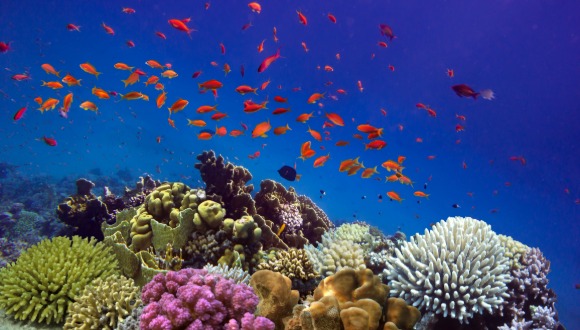
Species that depend on coral reefs are less likely to migrate from the Red Sea to the Mediterranean, resulting in a lower invasion potential.
New Sea, New Habits
The study also revealed that fish change their behavior after arriving in the Mediterranean.
Instead of continuing to occupy the same habitats they used in the Red Sea, successful invaders quickly adapt to the environments available in their new home.
The researchers also found that invasive fish do not primarily occupy empty ecological niches, as commonly assumed. Instead, they settle in the same habitats used by native Mediterranean species, suggesting that competition for food, shelter, and space may be much more intense than previously believed.
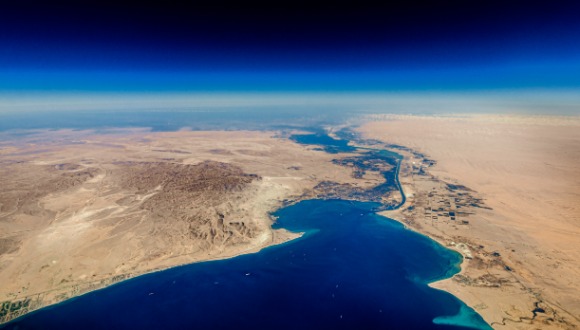
The opening of the Suez Canal in 1869 created a direct marine passage between the Red Sea and the Mediterranean, allowing marine species to migrate between the two seas.
Prof. Belmaker says:
“Until now, researchers have tried to understand biological invasions primarily by examining species that had already reached the Mediterranean. We took a step back and asked what characterizes these species before they begin their journey. This distinction allows us to move beyond explaining invasions that have already occurred toward predicting the next ones.”
As the Mediterranean continues to warm, the researchers expect tropical fish to establish themselves there more easily. They believe predictive models like this one could become an important component of environmental monitoring programs, helping scientists identify new arrivals sooner and better prepare for the ecological changes ahead.