


Who’s Rocking Europe’s Boat?
What really lies behind the unprecedented migration wave from Morocco to Spain?
In less than 24 hours this week, between 50,000 and 60,000 people, most of them young Moroccans, crossed into the Spanish enclave of Ceuta. Some entered through the official border crossing, while others swam around the breakwaters.
For a city of just 85,000 residents, the influx amounted to roughly 70% of its population. Reception centers, hospitals, and emergency services were overwhelmed almost overnight, prompting the deployment of the Spanish military and Civil Guard. According to reports, between 50 and 70 people died while attempting the crossing.
We asked Prof. Adriana Kemp, from the Department of Sociology and Anthropology at Tel Aviv University’s Gershon H. Gordon Faculty of Social Sciences, to explain what happened.
Was this event really unexpected?
What happened in Ceuta was not a sudden event.
Over the past three decades, the Spanish enclave at the African entrance to the Strait of Gibraltar has become one of the European Union’s most heavily fortified borders, featuring double fences reaching up to ten meters high, thermal cameras, sensors, advanced surveillance systems, maritime patrols, and close security cooperation with Morocco.
Precisely because the border is so heavily fortified, any breach carries significance far beyond a local incident.
The immediate trigger appears to have been a combination of factors. Rumors and videos circulating on social media claimed that “the border was open,” while a Spanish initiative to regularize the status of certain migrants was widely—but incorrectly—interpreted as an invitation to enter Spain.
Beyond these immediate triggers, however, many analysts believe the roots of the crisis run much deeper.
In recent years, Morocco and Algeria have competed for the role of Spain’s—and the European Union’s—key strategic partner, particularly in energy, trade, and security. As Spain strengthened its economic ties with Algeria, some observers suggested that Morocco temporarily relaxed border enforcement as a form of diplomatic pressure.
“The events in Ceuta are therefore not simply a story about migration,” says Prof. Kemp. “They are also about borders, international relations, and the ways in which people can become, often against their will, part of a much broader geopolitical struggle.”
Beyond Economics, What Drives Young Moroccans to Risk Their Lives?
“It is tempting to explain what happened in Ceuta with a single word: poverty,” says Prof. Kemp. “But that explanation is too simplistic.”
Research in the sociology of migration shows that the poorest people are often the least likely to migrate. Instead, one of the strongest drivers is relative deprivation—the gap between people’s expectations and the opportunities actually available to them.
For young Moroccans, that gap is highly visible.
Although Spain lies only 14 kilometers away, the economic and social differences remain vast. Constant exposure through social media, communication with relatives already living in Europe, and participation in a global culture where mobility is increasingly viewed as normal all reinforce the sense that opportunity lies “just beyond the fence.”
“When expectations for a better life collide with limited local opportunities,” Prof. Kemp explains, “migration can come to seem like the only viable option—even for educated young people.”
Why Does Spain Have Territory in Africa?
“The answer depends on where you begin the story,” says Prof. Kemp.
If the story begins in the seventeenth century, Ceuta appears to be a European enclave in Africa. But looking further back reveals that between 711 and 1492, Muslim dynasties originating in North Africa ruled large parts of the Iberian Peninsula.
Only after the Reconquista—the Christian reconquest of Spain—did the direction of territorial expansion reverse.
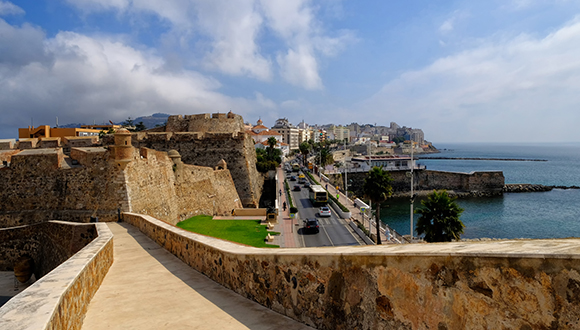
Ceuta was first conquered by Portugal in 1415 to control the Strait of Gibraltar and its trade routes. When Portugal and Spain later came under the same crown, Ceuta passed to Spain, and its status under Spanish sovereignty was formally recognized in the Treaty of Lisbon (1668).
Spain has also controlled Melilla, another enclave in present-day Morocco, since 1497.
This history has produced two competing narratives: for Spain, Ceuta and Melilla are Spanish cities with centuries of continuous sovereignty; for Morocco, they are remnants of European colonialism.
Today, both cities are autonomous Spanish territories and constitute the European Union’s only land border with Africa.
“This has turned Ceuta into something of a laboratory for European migration policy,” says Prof. Kemp. “It is where history, colonialism, sovereignty, security, migration, and geopolitics all intersect.”
She adds that perhaps the most important insight is that the dispute over Ceuta is not only about territory—it is also about where we choose to begin telling political history.
Could Young Moroccans Help Solve Spain’s Labor Shortage?
“In many ways, they already do,” says Prof. Kemp.
Spain is one of Europe’s fastest-aging societies, and its labor market faces persistent shortages in sectors such as agriculture, construction, caregiving, and tourism.
To address both demographic and economic challenges, the Spanish government has pursued a relatively open migration policy by expanding legal migration pathways, easing regularization procedures, and advancing reforms affecting hundreds of thousands of migrants.
As one of the fastest-growing economies in the Eurozone increasingly relies on migrants as workers, taxpayers, and contributors to slowing population aging, Europe faces a growing paradox.
Spain is also responsible for protecting the external border of the Schengen Area, meaning any changes in its migration policy quickly become a European issue.
The events in Ceuta prompted France to strengthen border controls and Italy to announce the temporary suspension of parts of the Schengen arrangements, reigniting debate over how responsibility for migration should be shared within Europe.
“Europe therefore faces a constant tension,” says Prof. Kemp. “It needs migrants more than ever, yet struggles to agree on who should be admitted and under what conditions—a question that increasingly shapes political identities and electoral politics.”
Could Morocco One Day Become a Destination for Migrants?
“Absolutely—and in many ways, that process has already begun.”
Morocco is often viewed solely as a country of emigration, but today it plays three simultaneous roles:
- a country of origin for young people seeking opportunities in Europe;
- a major transit country for migrants from Sub-Saharan Africa hoping to reach Spain and the rest of Europe;
- and a buffer state for the European Union.
As part of its cooperation with Spain and the EU, Morocco invests heavily in border control, preventing migrant boats from departing, and returning migrants from Sub-Saharan Africa.
“In this way,” Prof. Kemp explains, “Europe has effectively externalized parts of its border management to Moroccan territory.”
At the same time, Morocco itself has been changing rapidly.
Over the past decade it has invested heavily in automotive manufacturing, renewable energy, high-tech industries, major ports such as Tangier Med, and transportation infrastructure. As a result, Morocco has become one of North Africa’s most dynamic economies and is increasingly attracting workers, entrepreneurs, and migrants from Sub-Saharan Africa.
“This follows a familiar historical pattern,” says Prof. Kemp. “Countries such as Spain, Italy, and Greece were once countries of emigration before becoming destinations themselves. Morocco now appears to be following a similar path.”
Perhaps this is one of the most important lessons from the events in Ceuta.
Migration is no longer a one-way movement from poorer countries to wealthier ones. Countries change roles, migration routes evolve, and borders become spaces of negotiation, cooperation, and conflict.
“In that sense,” Prof. Kemp concludes, “Ceuta is not simply a story about migration. It is where many of the defining issues of the twenty-first century converge: fortified borders, global inequality, Europe’s aging population, Africa’s economic rise, Mediterranean geopolitics, social media, millennial mobility, and the place of migrants and ‘the other’ in contemporary politics of identity and belonging.”
She adds:
“For those of us who understand the hardships of displacement and the meaning of being a stranger, there is also the capacity to understand those seeking safety or simply a better life.”
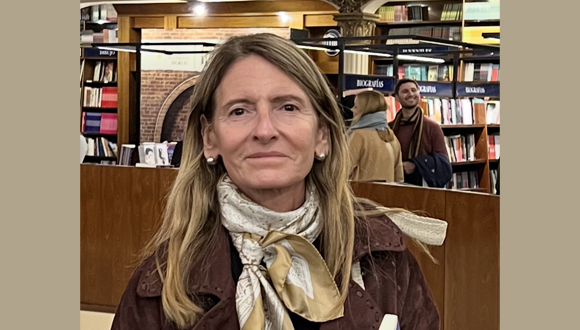
Prof. Adriana Kemp
Prof. Adriana Kemp holds the Mogulof Chair in Social Policy in the Department of Sociology and Anthropology at Tel Aviv University. She specializes in the sociology of migration, citizenship, and borders.